
16 February, 2026
The e-commerce landscape has shifted dramatically. Headless Shopify development is no longer a buzzword reserved for enterprise giants. In 2026, brands generating seven figures and beyond are actively abandoning their Liquid themes for something more powerful and conversion-focused.
Why the mass migration? Customer expectations have changed. Today's shoppers demand lightning-fast load times, seamless cross-device experiences, and personalized interactions that traditional themes struggle to deliver. When milliseconds affect your bottom line, conventional Shopify setups become a liability.
This guide covers everything you need to know about headless Shopify commerce. We'll explore why successful brands are making the switch, when it makes sense for your business, and how to navigate the transition without costly mistakes.
Headless Shopify separates your store's frontend presentation layer from the backend commerce engine. Instead of using Shopify's built-in Liquid templates, you build a custom storefront that communicates through the Storefront API. This gives you complete control over customer experience while Shopify handles inventory, payments, and order management.
Liquid themes served the e-commerce community well for years. They're accessible, easy to customize, and backed by thousands of apps. But as brands scale beyond certain thresholds, cracks begin to show.
The fundamental issue is architectural. Liquid themes render pages on Shopify's servers before delivering them to browsers. This server-side rendering creates bottlenecks that compound as your store grows in complexity and traffic.
Key limitations include
When revenue depends on conversion rates measured in fractions of a percent, these limitations translate directly to lost sales.
The migration to headless isn't trend-chasing. Successful brands make this move because they've calculated the ROI and found compelling reasons. Let's examine the primary drivers.
Google's Core Web Vitals directly influence search rankings and user experience. Headless Shopify development gives you granular control over every performance metric.
With a custom Shopify storefront, you choose your hosting infrastructure, implement aggressive caching, and optimize every asset. You can leverage CDNs precisely as needed and eliminate render-blocking resources.
Performance gains typically include
Liquid templates impose boundaries. Headless architecture removes them entirely.
When your frontend connects to Shopify via API, you can build any experience imaginable. Product configurators, interactive size guides, AR previews, and instant filtering systems all become achievable without fighting theme constraints.
This flexibility matters most for brands with unique value propositions. Teams working with expert Shopify developers can implement features impossible within theme limitations.
Conversion optimization in traditional Shopify requires working within narrow parameters. A/B testing often means choosing between bloated apps or custom development that risks breaking updates.
Headless transforms how you approach CRO. Implement testing frameworks at the code level, personalize experiences based on behavior, and iterate rapidly without theme compatibility concerns.
Common CRO implementations include
Brands investing in professional Shopify development services often see conversion improvements that justify the investment within months.
Flash sales, viral moments, and seasonal peaks can overwhelm traditional themes. While Shopify's backend handles high traffic well, frontend performance often degrades under load.
Headless architecture lets you scale frontend resources independently. Host your storefront on infrastructure designed for spikes, implement smart caching, and distribute load across global edge networks.
Modern consumers interact with brands across numerous touch points, such as mobile apps, in-store booths, voice assistants, and wearables.
Shopify's Storefront API serves as the single source of truth while feeding any frontend you build. Launch a native mobile app sharing the same product data as your web store. Power in-store experiences with real-time availability. Experiment with emerging channels without rebuilding your backend.
Understanding the technical differences helps inform your decision. Both approaches have merit depending on your situation.
| Feature | Shopify Liquid (Traditional) | Headless (Hydrogen + Oxygen) |
|---|---|---|
| Tech Stack | Liquid (Proprietary Ruby) | React / Remix / JavaScript |
| Data Fetching | Monolithic (All at once) | GraphQL (Only what you need) |
| SEO Control | Standard | Total (Custom URL/Metadata logic) |
| Speed (INP/TTFB) | 60-80 (Depends on Apps) | 95-100 (Edge Hosted) |
| Market Readiness | "Website" focused | "Everywhere" (Web, App, AR, IoT) |
Liquid themes require Shopify's proprietary templating language. Most developers learn it quickly, and the documentation is mature.
Headless development requires stronger technical skills, modern JavaScript frameworks, API integration, and potentially DevOps expertise. However, this opens access to the broader web development talent pool.
Liquid themes benefit from Shopify's update management. Headless storefronts require active maintenance: API changes, framework updates, and hosting management all fall under your responsibility.
Headless architecture shines in specific scenarios where traditional limitations create measurable problems.
Strong candidates include
Equally important is recognizing when headless creates unnecessary complexity.
The pragmatic approach? Maximize your current theme's potential first. Work with experienced e-commerce developers to optimize what you have. If limitations persist, headless becomes the logical next step.
Transparency about costs helps you budget accurately. Beyond obvious development expenses, several hidden costs catch brands off guard.
Building a headless storefront requires significantly more time than theme customization. Expect initial build costs to exceed even a premium theme setup considerably.
You'll pay for frontend hosting separately from your Shopify subscription. Production stores with serious traffic need reliable hosting that adds to monthly expenses.
Your headless frontend needs regular attention:
Many Shopify apps are not compatible with headless setups. Reviews, wishlists, and loyalty programs often need rebuilding from scratch.
Working with an experienced development partner helps mitigate these costs through efficient processes.
Successful migration requires careful planning and phased execution.
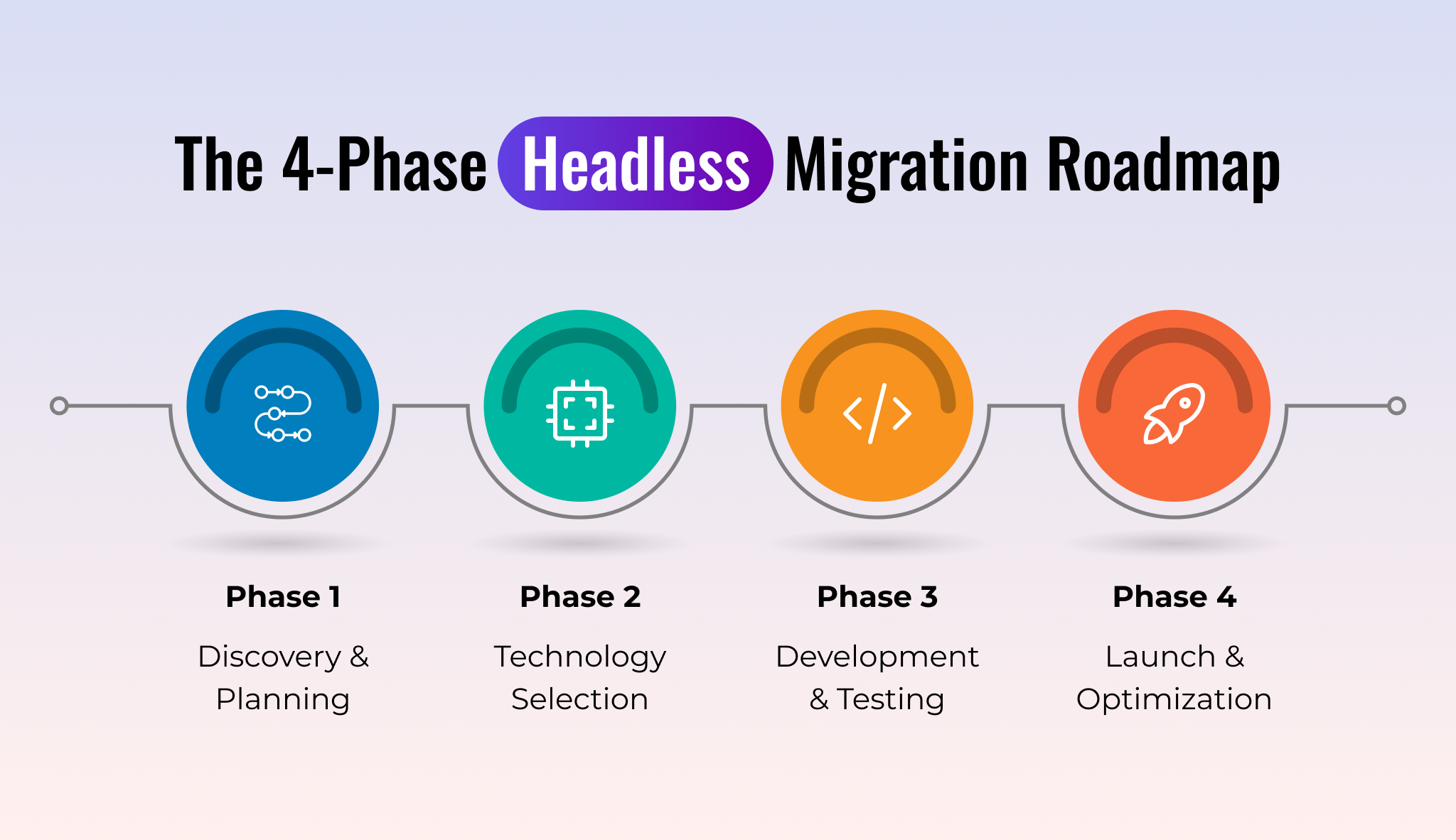
Document everything about your current setup
Consider Next.js, Remix, or Shopify Hydrogen. Each has trade-offs regarding the learning curve and community support.
Evaluate Vercel, Netlify, or self-managed solutions based on scaling requirements and framework integration.
Build incrementally
Plan for careful rollout:
Coordinating migration with an SEO service ensures search visibility transfers cleanly.
Learning from others' mistakes saves considerable pain.
Brands assume headless development takes a similar time to theme work. It doesn't. Budget time generously with contingency.
Headless sites can damage SEO if built carelessly. Server-side rendering, metadata management, and crawlability need attention from day one.
Building features because you can rather than because customers need them wastes budget. Start lean and add based on data.
Design and test mobile experiences first, then enhance for larger screens.
Select frameworks based on fit rather than hype. Consider team expertise and long-term viability.
Headless Shopify development represents a powerful option for brands ready to transcend theme limitations. The control over performance, creative freedom, and foundation for omnichannel growth make it compelling for scaling businesses.
However, headless isn't universal. It demands significant investment and technical capabilities that not every brand needs. The decision should flow from an honest assessment of current limitations and future ambitions.
For brands hitting ceilings with traditional themeswhere performance problems persist and unique experiences require impossible workarounds, headless Shopify offers a clear path forward. Success requires partnership with experienced teams who understand both possibilities and pitfalls.

Headless Shopify separates your customer-facing frontend from Shopify's backend commerce engine. Your custom storefront connects via APIs while giving you complete control over user experience.
When built correctly, headless stores significantly outperform Liquid themes. You control hosting, caching, and rendering strategies impossible within theme constraints.
Headless development costs substantially more than theme-based stores. Expect initial build costs several times higher than a premium theme setup, plus ongoing hosting and maintenance.
No. Most stores operate successfully with traditional themes. Headless makes sense for high-traffic stores, brands requiring unique experiences, or businesses building multi-channel platforms.
No. While Hydrogen provides a dedicated framework, you can use React, Vue, Next.js, or other technologies with Shopify's Storefront API.
Nikhil Shah is the CTO and Co-Founder of iSyncEvolution, an engineering leader who aligns modern technology best practices with long-term commercial success. A veteran of cloud infrastructure and scalable web/mobile solutions, he specializes in building high-performance software environments. Nikhil helps global brands master their technical roadmaps, optimizing both code performance and development economics to fuel growth.
© 2026 iSyncEvolution Pvt Ltd. All Rights Reserved.