
08 December, 2025
The Mobile App Development Process transforms innovative ideas into functional applications that solve real problems for users globally. Whether you're a startup founder, business owner, or technology enthusiast, understanding each phase of app creation helps ensure your project succeeds. This comprehensive guide walks you through every critical stage, from initial concept to post-launch optimization, providing insights into costs, timelines, and common challenges you'll encounter along the way.
Mobile app development is the process of creating software applications designed to run on mobile devices, such as smartphones and tablets. It involves planning, designing, coding, testing, and deploying applications for platforms such as iOS and Android, encompassing both frontend user interfaces and backend server infrastructure.
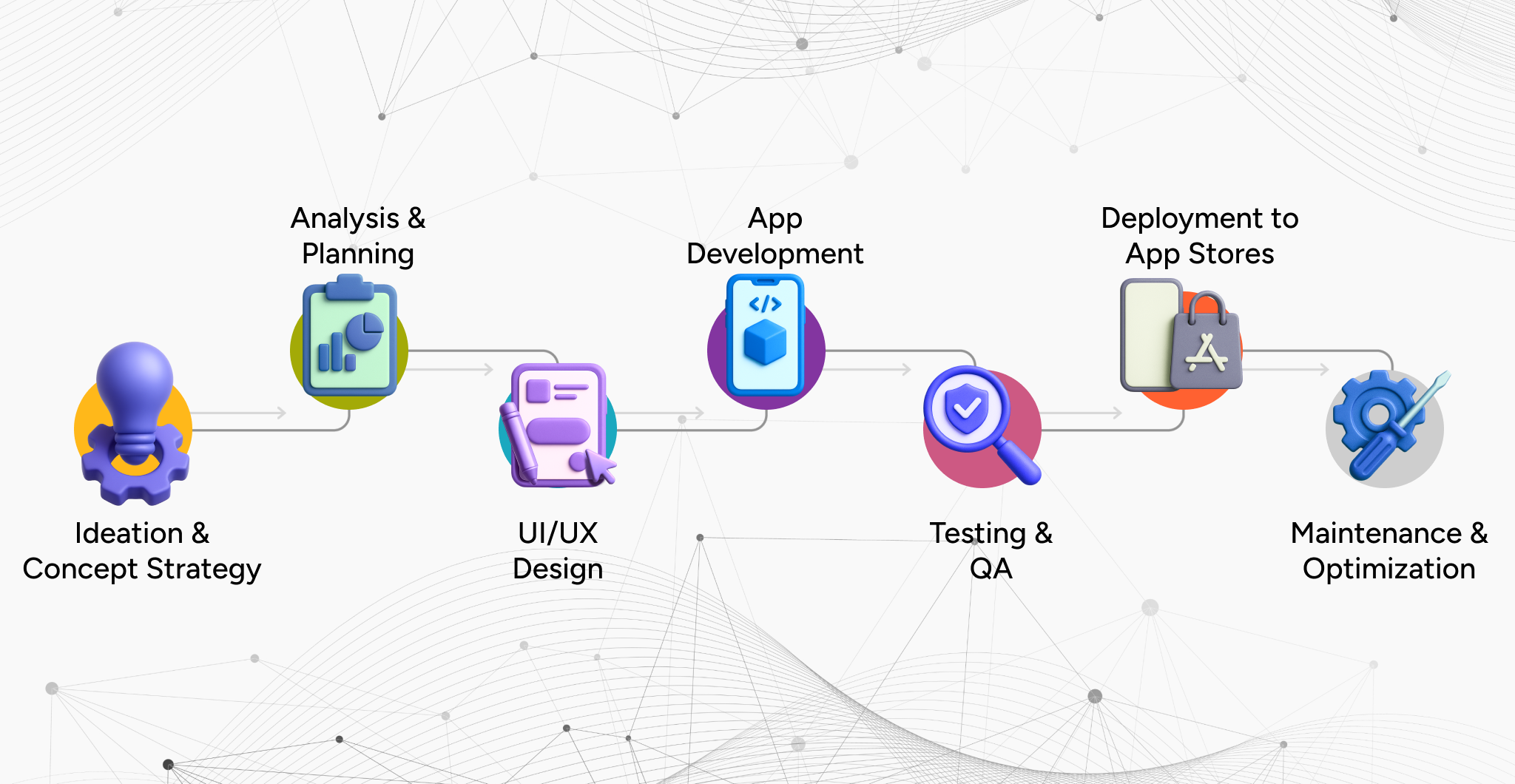
The mobile app development process consists of seven interconnected phases that guide your project from concept to completion. Each stage builds upon the previous one, creating a structured pathway that minimizes risks and maximizes your app's potential for success.
This foundational phase shapes your entire mobile app development process by establishing clear objectives and understanding your target market. During ideation, you'll define the core problem your app solves, identify target users and their pain points, and establish measurable business goals. This stage involves conducting market research to validate your concept, analyzing competitors to identify your unique positioning, and creating a clear value proposition that differentiates your app. You'll also outline preliminary monetization strategies and success metrics that will guide future decisions.
The planning phase transforms your concept into actionable requirements that guide the mobile app development lifecycle stages. Here, you'll gather both functional requirements (what the app does) and non-functional requirements (performance, security, usability standards).
Before selecting your tech stack, consider factors such as target audience preferences, development timeline, budget constraints, and long-term maintenance requirements.
The design phase brings your app to life visually, ensuring an optimal user experience throughout the mobile app design and development process. This stage begins with wireframing, where you create basic layouts that show the screen structure and navigation flow without visual styling.
Wireframes establish the skeleton of your app, mapping out element placement, navigation patterns, and content hierarchy. This low-fidelity approach allows quick iterations and feedback before investing in detailed designs.
Interactive prototypes simulate the actual app experience, enabling user testing before development begins. This validates your design decisions and identifies usability issues early, saving significant time and resources during the mobile app testing and QA process later.
The final design stage applies your brand identity through colors, typography, icons, and imagery. Following mobile app UI UX design best practices ensures your app remains intuitive while delivering a visually appealing experience that resonates with users.
Development represents the core technical phase where your app takes shape through coding and system architecture. The mobile app backend and frontend development steps work in parallel to create a cohesive application.
Frontend developers build the client-side application that users interact with directly. This includes implementing the user interface, handling user inputs, managing local data storage, and ensuring smooth navigation between screens. The frontend must adapt to different screen sizes and orientations while maintaining consistent performance.
Backend development creates the server-side infrastructure supporting your app's functionality. This involves:
Modern apps often require integration with external services, such as payment gateways, social media platforms, mapping services, or communication tools. Each integration must be carefully implemented and tested to ensure reliability and security.
When planning complex features, understanding the cost to make an app like Uber can provide valuable budgeting insights for similar functionality.
Testing ensures your app meets quality standards and provides a bug-free experience across all supported devices. The mobile app testing and QA process encompasses multiple testing types that validate different aspects of your application.
Following mobile app security essentials during this phase helps protect user data and maintain trust.
The deployment phase transitions your app from development to production, making it available to users through app stores or enterprise distribution channels. This critical stage requires careful preparation to ensure a successful launch.
The mobile app development process continues long after launch through ongoing mobile app maintenance and updates. Post-launch activities ensure your app remains relevant, secure, and competitive in the evolving mobile landscape.
Continuous monitoring identifies issues that require immediate attention. Regular updates address bugs, improve performance, and add features based on user feedback. This iterative approach keeps users engaged and maintains positive app store ratings.
Analyzing app performance metrics helps identify bottlenecks and opportunities for optimization. This includes reducing load times, minimizing battery consumption, and enhancing memory management for a more seamless user experience.
As your user base grows, mobile app localization and scaling become crucial for expanding into new markets. This involves translating content, adapting it to cultural preferences, and ensuring that the infrastructure can handle increased user loads effectively.
Understanding app development project planning and estimation helps set realistic expectations for your mobile app development process. Costs and timelines vary significantly based on app complexity, features, platform choices, and team location.
Factors affecting cost include:
When deciding between mobile and web solutions, consider reading about the differences between web development and app development to make an informed choice for your business.
Every mobile app development process faces obstacles that can impact timeline, budget, and quality. Understanding mobile app development challenges and solutions prepares you to address and solve these issues effectively.
The vast array of devices, screen sizes, and operating system versions complicates development and testing. Solutions include responsive design principles, thorough device testing, and prioritizing popular device configurations.
Balancing feature richness with app performance requires careful optimization. This involves efficient code practices, image optimization, lazy loading techniques, and minimizing network requests.
Protecting user data and preventing breaches requires comprehensive security measures throughout the development process. Implement encryption, secure authentication, and conduct regular security audits, adhering to platform-specific security guidelines and best practices.
Keeping users engaged after download presents ongoing challenges. Address this through intuitive onboarding, regular content updates, push notification strategies, and continuous improvement based on user feedback.
Operating system updates can break existing functionality or introduce new requirements. Maintain compatibility through regular testing, staying informed about platform changes, and planning update cycles accordingly.
Finding the right development team is crucial for overcoming these challenges. Learn how to hire an app developer to build a capable team for your project.
The mobile app development process demands careful planning, skilled execution, and ongoing commitment to create successful applications. From initial conceptualization through post-launch optimization, each phase contributes to your app's ultimate success. Understanding these stages, anticipating challenges, and following established best practices positions your project for positive outcomes. Whether building your first app or improving existing processes, this structured approach provides the foundation for delivering valuable mobile experiences that meet user needs and business objectives.

The first step is ideation and conceptualization, where you define your app's purpose, target audience, and core problem it solves. This foundational phase establishes clear objectives and validates your concept through market research.
Development timelines vary by complexity: simple apps take 2-4 months, moderate complexity apps require 4-8 months, and complex applications need 8-12 months or more. The timeline depends on the features, platforms, and team resources.
The seven critical stages are strategy/ideation, analysis/planning, UI/UX design, development, testing, deployment, and maintenance. Each stage builds upon previous work to create a comprehensive development framework.
Plan to allocate 15-20% of your initial development cost annually for maintenance. This covers bug fixes, security updates, feature enhancements, and compatibility updates for new OS versions.
Select options based on your target audience's demographics and geographic location. iOS users typically spend more on apps, while Android has a larger global market share. Consider cross-platform development to reach both audiences simultaneously.
Nikhil Shah is the CTO and Co-Founder of iSyncEvolution, an engineering leader who aligns modern technology best practices with long-term commercial success. A veteran of cloud infrastructure and scalable web/mobile solutions, he specializes in building high-performance software environments. Nikhil helps global brands master their technical roadmaps, optimizing both code performance and development economics to fuel growth.
© 2026 iSyncEvolution Pvt Ltd. All Rights Reserved.