
22 December, 2025
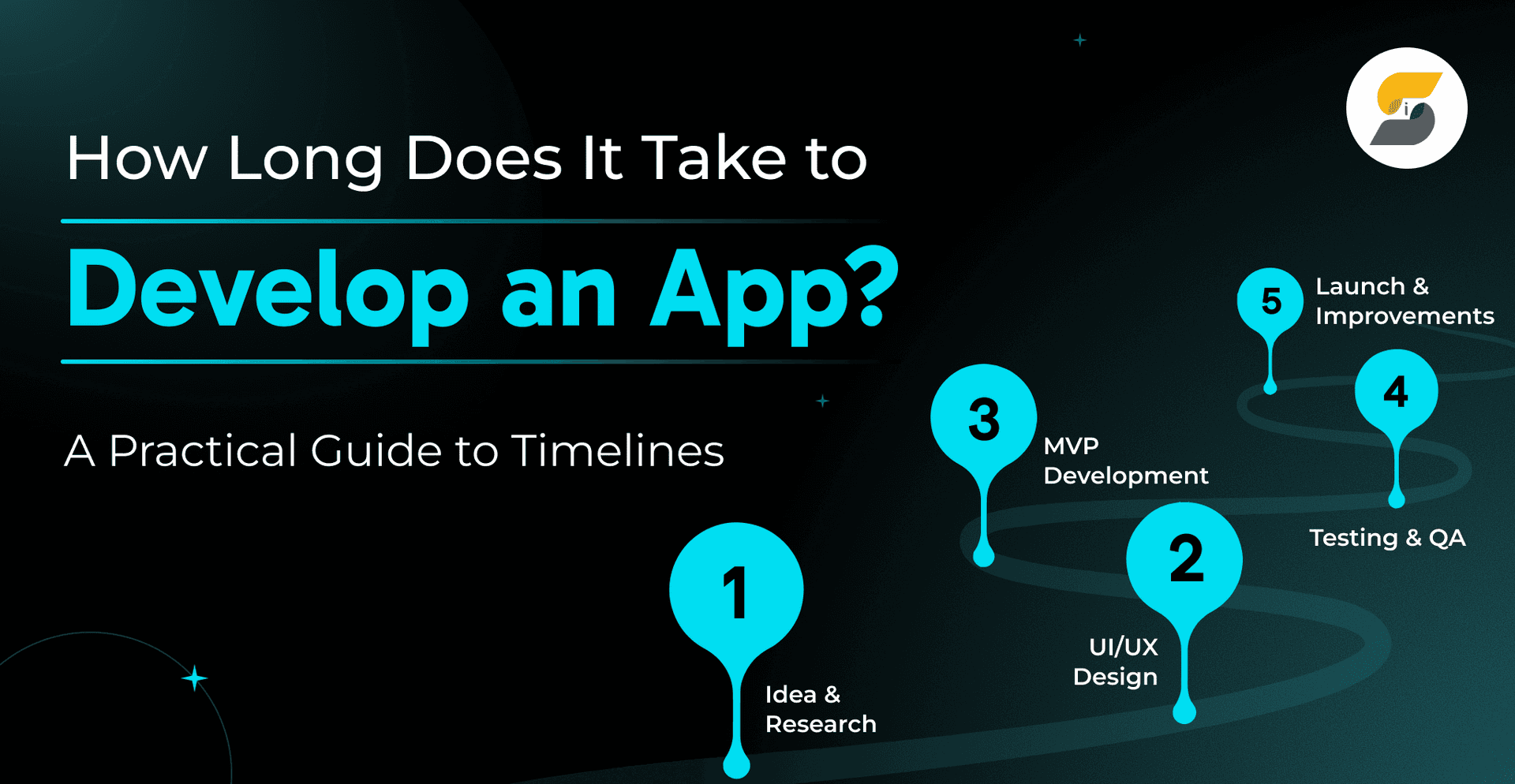
Building a mobile app is exciting, but one of the first questions businesses ask is: how long will it take? Understanding App Development Timelines helps you plan resources effectively, budget efficiently, and time your market entry. The truth is, development schedules vary significantly based on complexity, features, and your specific needs. This comprehensive guide outlines each essential stage of the process, from the initial concept to post-launch optimization. It also provides insights into costs, timelines, and common challenges you may encounter throughout the journey.
An app development timeline is a comprehensive schedule that spans from concept to launch, encompassing all phases necessary to transform your idea into a functional mobile application. It includes planning, design, development, testing, and deployment stages.
Understanding your mobile app development timeline has a direct impact on business success. When you know realistic timeframes, you can align product launches with marketing campaigns, secure appropriate funding, and manage stakeholder expectations effectively. A clear app development schedule prevents costly delays and keeps your team focused on delivering value at each milestone.
Poor timeline planning leads to rushed development, compromised quality, or missed opportunities. Companies that understand development phases typically achieve better outcomes and avoid launching incomplete products. Whether building internally or planning to hire mobile app developers, having realistic expectations about the time required to make an app ensures smoother execution.
Every successful mobile app follows a structured development lifecycle. Understanding these stages helps you anticipate what happens when and allocate resources effectively. Let's explore each phase with typical durations and key activities.
The discovery phase establishes the foundation of your project. During these initial weeks, teams validate ideas, gather requirements, and define scope. This involves conducting stakeholder interviews, conducting market research, analyzing competitors, and creating a comprehensive project plan. You'll establish objectives, identify target users, and document technical specifications.
The design phase transforms ideas into visual concepts that users can understand. Designers create wireframes that show the app's structure, develop mockups with branding, and map user flows. This stage involves interactive prototypes that simulate functionality without requiring coding, enabling validation before development commences.
Development represents the longest phase in most custom app development timelines. Programmers build the front-end interface, create back-end systems for data and logic, and integrate third-party services. This phase requires coordination between developers, designers, and project managers to ensure features match specifications while maintaining quality.
Quality assurance ensures your app works flawlessly across devices and scenarios. Testing teams identify bugs, verify performance, check security vulnerabilities, and ensure platform compliance. The mobile app project timeline breakdown for testing depends on complexity and device support requirements.
Deployment transitions your app from development to production. Teams prepare app store submissions, configure servers, complete release checklists, and coordinate launch. While submission takes days, app store reviews can extend timelines, particularly for iOS apps requiring Apple's approval.
After launch, the app development time estimate extends into maintenance. Teams monitor performance, fix bugs, implement feedback, add features, and ensure OS compatibility. Mobile application maintenance is crucial for long-term success.
Understanding how complexity affects your app development schedule helps set realistic expectations. Here's a breakdown of typical timelines:

Simple apps include basic functionality with a few screens and a minimal backend. These focus on core features without complex integrations. Examples include flashlight apps, simple games, or basic productivity tools.
Medium complexity apps incorporate moderate features with backend systems and APIs. These require thoughtful UI/UX design, authentication, data synchronization, and possibly payments. Most consumer apps fall into this category, offering value while maintaining reasonable development timeframes.
Complex or enterprise apps demand extensive planning and resources. These support multiple platforms, integrate numerous services, implement advanced security, and scale for millions of users. The extended custom app development timeline reflects compliance, testing, and infrastructure requirements.
Several factors influence the time it takes to develop an app beyond its basic complexity. Platform choice significantly impacts timelines—developing for iOS and Android essentially doubles certain efforts. Native development takes longer than cross-platform solutions, though it offers superior performance.
Feature scope creep poses the greatest threat to timelines. When requirements change mid-development or stakeholders request additions, the app development project timeline extends. Clear specifications and disciplined change management maintain schedule integrity. Third-party integrations add complexity, requiring additional development and testing.
Team expertise correlates with development speed. Experienced developers work efficiently, anticipate issues, and implement best practices. However, adding developers doesn't always accelerate timelines due to coordination overhead. The mobile app development process benefits from balanced teams with complementary skills.
Accelerating your mobile app development timeline requires strategic planning, not shortcuts. Start with an MVP approach—launch core features first, then add enhancements iteratively. This enables your app to reach the market faster while gathering user feedback.
Cross-platform frameworks, such as React Native or Flutter, reduce development time by allowing code to be shared across multiple platforms. While some features may require native development, these frameworks significantly accelerate the development of most applications. When choosing your tech stack, consider maintenance alongside initial speed.
Consider partnering with experienced teams who understand pitfalls and best practices. Before hiring a mobile app development company, evaluate their track record of delivering on schedule.
Understanding realistic App Development Timelines enables better business decisions. While simple apps might launch within 2–4 months, complex solutions require 6–9 months or more. The mobile app development timeline depends on several factors, including complexity, platform requirements, team expertise, and the scope of features. Success comes from striking a balance between speed and quality, ensuring your app meets user needs without compromising its functionality or quality. Whether building internally or partnering with experts, clear timeline expectations and structured planning drive successful launches.
Ready to bring your app idea to life? Partner with iSyncEvolution to navigate your development journey with confidence. Visit Our Website to explore how our expertise can accelerate your timeline while ensuring exceptional quality.
Very simple apps with minimal features might be possible in under 2 months. However, most functional apps need at least 2–4 months for proper design, development, and testing.
Add a 20–30% buffer to initial estimates. This accounts for unexpected challenges, feedback iterations, and app store approvals that might extend timelines.
Not necessarily double, but it adds 40–60% more time compared to single-platform development. Cross-platform frameworks reduce this overhead by sharing code across platforms.
Development/coding typically consumes 40–50% of the total timeline. However, inadequate planning or extensive testing can shift this balance.
Google Play Store usually approves within 24 hours. Apple App Store reviews typically take 24–48 hours, although new developer accounts may experience a delay of up to 7 days.
Nikhil Shah is the CTO and Co-Founder of iSyncEvolution, an engineering leader who aligns modern technology best practices with long-term commercial success. A veteran of cloud infrastructure and scalable web/mobile solutions, he specializes in building high-performance software environments. Nikhil helps global brands master their technical roadmaps, optimizing both code performance and development economics to fuel growth.
© 2026 iSyncEvolution Pvt Ltd. All Rights Reserved.